
In Texas, weather is not small talk. It’s a regular stress test for your property. One week it’s extreme heat, the next it’s a hard storm line, and somewhere in there you get wind that turns fence panels into sails. If you manage a site with an automatic gate, you’ve probably felt it: everything seems fine until it suddenly isn’t, and now residents, tenants, or staff are stuck at the entrance. That’s why Texas electric gate maintenance is not optional; it’s how you prevent downtime.
Weather-related problems often look random from the outside. A gate that ran smoothly in spring starts dragging in late summer. A fence line that looked straight last month is leaning after a storm. An operator that sounded normal yesterday is struggling today. The reality is that Texas weather impacts gates and fencing in predictable ways, and the right materials, installation, and maintenance plan can prevent most of the recurring issues.
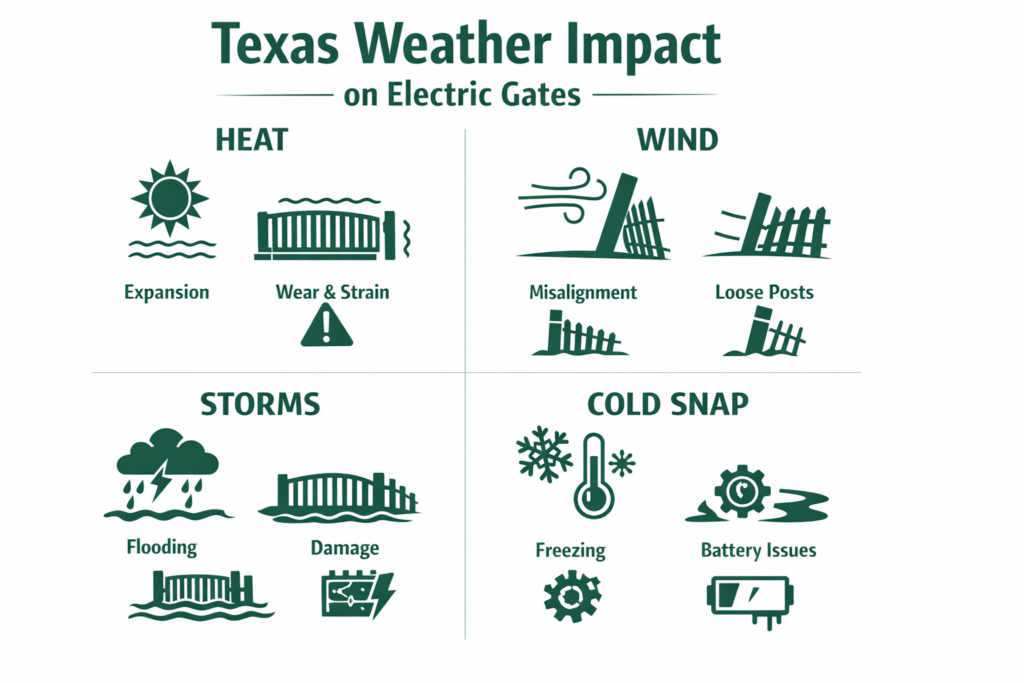
Heat in Texas: expansion, sagging, and operator strain
Extreme heat changes the rules for automatic gates. Metal expands, and even minor expansion can throw off clearances and alignment. On slide gates, that can show up as rubbing, binding, or inconsistent travel. On swing gates, it can show up as sag, hinge stress, or the gate leaf catching the ground.
Heat also speeds up wear on rollers, bearings, wheels, and lubricants. Dust and grit get pulled into moving parts, grease breaks down faster, and friction rises. When friction rises, operators work harder. When operators work harder, parts wear faster, and performance gets less consistent. If a gate gets louder, slower, or rougher during the hottest months, that’s usually an early warning sign. Solid Texas electric gate maintenance is catching that early, before it becomes an after-hours emergency.
Materials matter here. A properly built frame with the right stiffness, quality corrosion protection, and hardware sized for the load will tolerate Texas heat far better than a light-duty setup that flexes. Correct installation matters just as much. Posts need to be set right, hinges need proper support, and the gate needs true alignment so normal thermal movement does not turn into constant drag.
Wind: the invisible force that racks frames and leans posts
Texas wind does damage in slow motion. It racks gate frames, works fasteners loose, and pushes fence lines out of plumb over time. Solid panels and privacy fencing catch more wind, which means more stress on posts and hardware. On automated gates, wind can create a sail effect where the gate flexes as it moves, adding uneven load to hinges, rollers, and operators.
This is where shortcuts show up fast. Posts that are undersized or not set deep enough may look fine for months, then start leaning after repeated wind events. Once posts lean, gates sag. Once gates sag, they drag. Then the operator strains, and that’s when service calls start stacking up.
A weather-smart install accounts for exposure and load. That means proper post sizing, correct footing depth and concrete volume, and bracing where it makes sense. It also means choosing gate designs that balance security with wind resistance, especially on large openings.
Storms and heavy rain: drainage issues, corrosion, and reliability problems
Storms are when multiple problems hit at once. Heavy rain can erode soil around fence posts, especially in areas with poor drainage or wash patterns. Over time, that undermines stability even if the concrete itself is solid. For slide gates, storms can wash debris into the path, clog tracks, and create mud that grinds down wheels and rollers.
Automation adds another layer. Water intrusion into conduits, control enclosures, and connection points can cause intermittent faults that are hard to diagnose. Safety devices can be knocked out of alignment or blocked by debris. After storms, it’s common to see gates that “kind of work” but behave inconsistently, which is where safety risk and downtime both climb. A good Texas electric gate maintenance plan includes storm follow-ups, not just repairs after failure.
Good installations plan for water. That means drainage and elevation around the gate area, sealed conduit entries, protected control equipment, and smart mounting of sensors so they stay aligned.
Cold snaps: rare, but they expose weak points
Texas cold snaps do not happen often, but they expose gates that are already close to binding. Lubricants thicken, batteries underperform, and moisture can freeze in tracks or around moving parts. A gate that moves freely year-round tends to handle cold better than one that’s already grinding through its travel.
Why materials and installation make the difference in Texas
The biggest mistake property owners make is focusing only on the operator or only on fence material. In Texas, systems fail at the weak link. A high-end operator cannot overcome a dragging gate forever. A strong fence panel will not stay straight if posts are not set correctly for the soil and wind load. And a nice-looking install will not stay reliable if drainage is ignored.
Long-term performance comes from fundamentals that are not flashy: solid foundations, alignment, corrosion resistance, proper hardware selection, and smart placement of automation components. When those are done right, Texas electric gate maintenance becomes simple and predictable instead of expensive and reactive.
A simple Texas electric gate maintenance check
- Does the gate move smoothly? Listen for scraping, grinding, slamming, or jerky motion, especially in peak heat.
- Do posts, hinges, and rollers look stable? Leaning posts and sagging hinges are early signs of wind load or foundation problems.
- Is the area around the gate draining well? Standing water, washed-out soil, and muddy tracks are a fast track to failure.
Also, keep a basic maintenance log. It does not have to be fancy. A dated record of inspections, adjustments, and repairs helps catch patterns early and protects you when questions come up after a failure.
When it’s time to schedule a Texas electric gate maintenance inspection
If your gate is doing anything unpredictable, it’s time for an inspection. Contact Penco Access Control and schedule a checkup if you notice rough movement, random stopping or reversing, vehicles getting bumped, or any safety device that has been bypassed to keep the gate running. If storms regularly flood the gate path or wind events keep knocking things out of alignment, don’t wait. A proper inspection should leave you with a clear, written snapshot of what is working, what is at risk, and what to fix first.
Key takeaways
- Heat causes expansion and wear that can lead to drag and operator strain.
- Wind slowly pushes gates and fence lines out of alignment.
- Storms create drainage, debris, corrosion, and electrical reliability issues.
- Materials help, but foundations and installation quality matter just as much.
- Consistent Texas electric gate maintenance reduces downtime and long-term costs.